
Safety equipment is not simply another item on a project procurement list. In construction, oil and gas, manufacturing, infrastructure, utilities, marine operations, and other high-risk environments, the right equipment can help protect workers from serious hazards. But choosing equipment based only on appearance, price, or a certification mark is not enough.
Certified safety equipment is important because it provides evidence that a product has been assessed against applicable safety requirements and standards. For businesses operating in the UAE, certification and supporting documentation can also help demonstrate conformity, satisfy project specifications, support HSE requirements, and reduce the risk of purchasing unsuitable or substandard products.
The UAE places clear responsibilities on employers to provide protection against occupational risks. Workers are also required to use the protective equipment provided to them correctly.
For procurement teams, the question is therefore not only, “Is this PPE certified?” It is also, “Is it the right certified product for this hazard, project, worker, and application?”
What Does Certified Safety Equipment Mean?
Certified safety equipment is equipment that has been evaluated against specified technical or safety requirements through an applicable conformity assessment, testing, or certification process.
Depending on the product and regulation, supporting evidence can include a Certificate of Conformity, Declaration of Conformity, test report, manufacturer documentation, product identification, and traceability information.
In the UAE, MOIAT provides conformity certification services for products subject to technical regulations. Its service information states that a UAE Certificate of Conformity confirms that applicable products comply with approved standard specifications, and the process can require a test report from an accredited laboratory.
For personal protective equipment specifically, MOIAT’s published regulated-product information identifies PPE under the UAE conformity framework and lists requirements including ISO 17025 accredited laboratory test reports and product registration through the relevant ECAS process.
This does not mean every item of PPE uses one universal certificate or one universal standard. The applicable requirements depend on the product, hazard, technical regulation, intended use, and project specifications.
Why Is Certified Safety Equipment Important in GCC Projects?
Projects across the GCC can involve extreme heat, dust, chemicals, heavy machinery, work at height, electrical hazards, confined spaces, hydrocarbons, fire risks, and other demanding conditions.
Certified equipment helps businesses make a more informed connection between the hazard, required protection, applicable standard, product documentation, and actual use.
Here are the main reasons certification matters.
1. It Helps Protect Workers From Specific Hazards
The first purpose of PPE is protection.
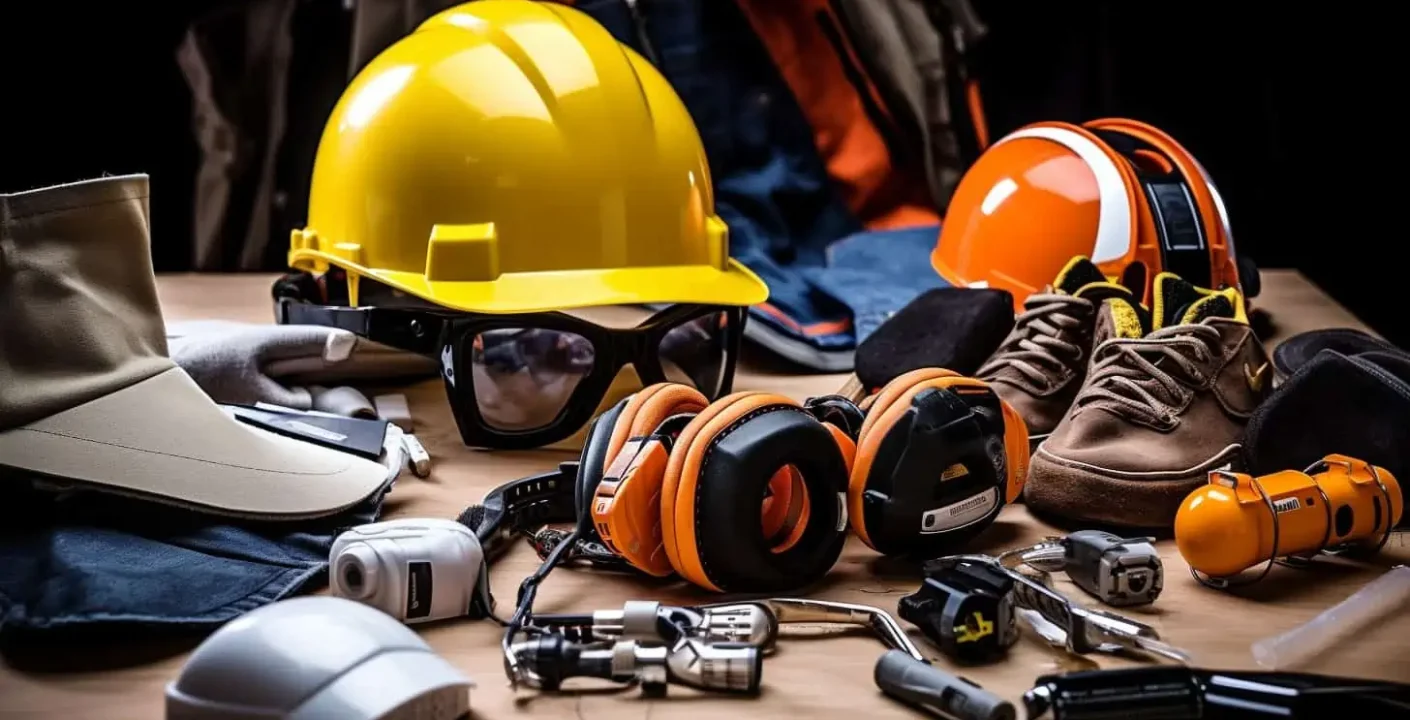
Safety helmets, safety footwear, gloves, safety goggles, face shields, respirators, hearing protection, protective clothing, fall protection equipment, and other PPE are designed for different hazards. A product suitable for one situation may be inappropriate for another.
For example, a worker exposed to falling objects needs suitable head protection. A worker handling chemicals may require different gloves and protective clothing from someone performing mechanical work. A worker operating at height requires an appropriate fall-protection system rather than ordinary workwear.
UAE occupational safety guidance requires employers to provide appropriate protection against occupational risks, while MOHRE’s occupational safety decision states that PPE should be selected according to the assignment and duration of use and should provide maximum protection against workplace hazards.
2. It Supports Regulatory and Project Compliance
Certification can provide documented evidence that a product has been assessed against applicable requirements.
This matters because major projects often have procurement specifications, HSE requirements, client standards, approved-vendor procedures, and technical documentation requirements.
A product may look identical to another product but have completely different testing, documentation, or performance characteristics.
For UAE businesses, the applicable regulatory framework can include federal requirements as well as requirements imposed by the relevant authority, client, project owner, or industry.
3. It Gives Procurement Teams Verifiable Documentation
Procurement teams need more than a product photograph.
For project safety equipment, useful documentation can include:
- Certificate of Conformity
- Declaration of Conformity
- accredited laboratory test report
- applicable standard or technical specification
- manufacturer information
- product/model number
- product label information
- certification details
- instructions for use
- inspection or maintenance information where applicable
Documentation gives procurement and HSE teams something they can review and compare with project requirements.
4. It Reduces the Risk of Substandard Products
The UAE market contains safety equipment from many manufacturers and international supply chains. A product being sold as “industrial grade” or “professional PPE” does not by itself prove that it meets the required technical standard.
Certification and supporting records make verification easier.
This is particularly important when purchasing bulk safety equipment for a large workforce. Replacing a small number of unsuitable items is one thing; discovering that an entire project shipment does not satisfy the required specification can create significant operational problems.
5. It Supports Audits and HSE Reviews
Large contractors and industrial companies commonly maintain documented HSE systems.
During an internal review, client audit, project inspection, or procurement evaluation, teams may need to demonstrate why a particular item was selected.
A documented certification and testing trail can make this process easier.
The UAE Government states that employers must provide the necessary means of protecting workers from occupational injuries and diseases, provide appropriate training, and conduct periodic evaluations of occupational health and safety compliance.
6. It Helps Contractors Meet Client Specifications
A contractor may purchase PPE that is legally available and generally recognized but still find that it does not meet a particular client’s project specification.
This is why certification does not automatically equal suitability.
A project may specify particular standards, product characteristics, brands, performance levels, documentation, or approval requirements.
The correct approach is:
Hazard → required protection → applicable standard → suitable certified product → project approval → correct use and maintenance.
7. It Improves Procurement Confidence
When procurement teams can verify the product, standard, documentation, manufacturer, model, and certification information, they have greater confidence in what they are purchasing.
That confidence becomes especially important for critical PPE such as fall protection, respiratory protection, protective clothing, safety helmets, and equipment used in high-risk industrial environments.
What Certification Means for UAE Projects
The UAE has a formal conformity framework for products subject to technical regulations.
MOIAT’s current service states that a UAE Certificate of Conformity is used for products subject to technical regulations and confirms conformity with approved standard specifications. The stated service requirements include a valid trade licence and a product test report issued by an accredited laboratory.
For PPE, MOIAT’s regulated-product information specifically identifies personal protective equipment within the UAE conformity framework and lists ISO 17025 accredited laboratory test reports among the requirements.
This is important for buyers because it shows why a supplier should be able to provide meaningful documentation rather than simply saying that a product is “certified.”
At the same time, buyers should check whether a particular product is actually subject to a UAE technical regulation and what conformity route applies. Not every product should be treated as though it follows exactly the same certification process.
Common Safety Equipment Standards Used in UAE Projects
Different PPE categories use different standards because each protects against different hazards.
Some standards commonly encountered in safety equipment procurement include:
| Safety Equipment | Example Standard | Main Protection Area |
| Safety helmets | EN 397 | Industrial head protection |
| Safety helmets | ANSI Z89.1 | Industrial head protection |
| Safety footwear | EN ISO 20345 | Protective footwear |
| Safety gloves | EN 388 | Mechanical risks |
| High-visibility clothing | EN ISO 20471 | Worker visibility |
| Full-body harnesses | EN 361 | Fall protection |
| Lanyards | EN 354 / EN 355 | Fall protection systems |
| Respiratory protection | EN 149 | Filtering respiratory protection |
These are examples, not a universal checklist for every UAE project. The correct standard depends on the product, application, hazard, and project requirements.
For example, Dubai Municipality guidance for head protection references EN 397, EN 14052 and ANSI Z89.1.
The key lesson for procurement teams is simple: do not select PPE by standard number alone. Match the standard and product to the actual hazard and required level of protection.
What Types of Certified Safety Equipment Are Used in Projects?
Different industries require different combinations of PPE.
Safety Helmets
Safety helmets help protect workers against specified head hazards, including impacts and falling objects where the selected helmet is designed for those risks.
Safety Footwear
Safety shoes and boots can provide protection against hazards such as impact, compression, penetration, and other risks depending on their design and applicable standard.
Safety Gloves
Gloves should be selected according to the task. Mechanical handling, chemicals, heat, electrical work, and other hazards can require different protective characteristics.
Eye and Face Protection
Safety goggles and face shields can help protect workers from particles, splashes, chemical hazards, and other risks when correctly selected for the application.
Hearing Protection
Earplugs and earmuffs can help reduce exposure to excessive workplace noise when selected and used as part of an appropriate hearing-protection program.
Respirators
Respiratory protection must match the contaminant and exposure conditions. A filtering respirator designed for one type of hazard should not automatically be assumed to protect against another.
Fall Protection
Full-body harnesses, lanyards, connectors, and related fall-protection equipment require careful selection because work-at-height systems involve more than simply wearing a harness.
Protective Clothing
Coveralls, flame-resistant clothing, chemical-resistant garments, high-visibility clothing, and other protective workwear serve different purposes.
For oil and gas, petrochemical, construction, and industrial projects, protective clothing may need to address several hazards simultaneously.
How to Verify Safety Equipment Before Buying
A practical verification process can prevent many procurement problems.
1. Identify the Hazard
Start with the work activity.
Ask what can actually harm the worker: impact, chemicals, heat, fire, electricity, noise, dust, falling objects, contaminated materials, or a fall from height.
2. Identify the Applicable Standard
Once the hazard and PPE category are known, identify the standard or technical requirement applicable to that product and application.
3. Check the Exact Product and Model
Do not verify a certificate only by looking at a brand name.
Check the product description, model, size or other identifying information against the documentation.
4. Request Supporting Documents
Depending on the product, ask for relevant documents such as:
- Certificate of Conformity
- Declaration of Conformity
- laboratory test report
- technical datasheet
- manufacturer information
- instructions for use
- product certification details
5. Check the Testing Source
Where an accredited laboratory report is required, confirm that the report comes from an appropriately recognized laboratory and relates to the actual product.
MOIAT’s current conformity service specifically identifies accredited-laboratory test reports among its requirements.
6. Match the Documents to the Product
A genuine certificate for one model does not automatically certify another model.
Check product numbers, descriptions, manufacturer information and other identifiers.
7. Confirm Project Requirements
Finally, compare the product with the project’s HSE plan, client specification, contractor requirements, applicable regulations, and procurement documentation.
This step is often overlooked.
What Documents Should a Safety Equipment Supplier Provide?
The exact documents vary by product, but a professional safety equipment supplier in UAE should be able to explain the compliance documentation available for the equipment being supplied.
Depending on the product and project, buyers may request:
- product certificate
- Certificate of Conformity
- Declaration of Conformity
- test report
- technical datasheet
- manufacturer’s instructions
- product identification
- applicable standard information
- traceability information
- inspection or maintenance records where relevant
For regulated products, the required documentation may be more specific.
This is why procurement teams should avoid asking only, “Is it certified?” A better question is, “What certification applies to this exact product, what standard was used, and can you provide the supporting documentation?”
What Are the Risks of Using Uncertified or Poorly Documented Equipment?
Using safety equipment without adequate verification can create several problems.
The obvious risk is inadequate protection. But procurement and project risks can also include:
- client rejection
- failed technical evaluation
- replacement costs
- project delays
- audit findings
- documentation gaps
- difficulty proving conformity
- worker exposure to hazards
- supplier disputes
- increased operational risk
Consider a contractor preparing PPE for a large construction project. If the purchasing team selects equipment based only on a low price and later discovers that the products do not meet the client’s specified requirements, the contractor may have to replace the shipment before workers can use it.
The initial saving can quickly disappear.
How to Choose a Certified Safety Equipment Supplier in the UAE
Choosing the right supplier is about more than finding the lowest quotation.
A reliable supplier should be able to discuss the technical requirements of the equipment and provide appropriate product documentation.
Before placing a project order, consider:
- Does the supplier understand the application?
- Can they provide relevant certification documents?
- Are product models clearly identified?
- Can they support bulk or project requirements?
- Can they provide manufacturer documentation?
- Do the products match the required standards?
- Can they maintain consistent supply?
- Can they explain differences between similar PPE products?
- Can they support documentation requirements for procurement and HSE teams?
For companies sourcing industrial safety equipment UAE projects, these questions can be more valuable than comparing price alone.
If you are researching related equipment categories, read our guide industrial safety equipment for a broader look at the types of protection used across industrial workplaces.
Certified Safety Equipment for Different UAE Industries
Construction
Construction sites can involve work at height, excavation, heavy machinery, electrical work, falling objects, dust, noise, and moving vehicles.
PPE selection should therefore follow the site’s hazard assessment rather than relying on a standard one-size-fits-all kit.
Oil and Gas
Oil and gas environments can involve hydrocarbons, chemicals, fire risks, confined spaces, gases, high temperatures, mechanical hazards, and work at height.
Certified PPE for oil and gas projects may include protective clothing, safety footwear, gloves, eye protection, respiratory protection, fall protection, and other specialized equipment depending on the task.
Manufacturing
Manufacturing facilities can expose workers to machinery, sharp materials, noise, chemicals, heat, and moving components.
The right combination of PPE should be determined by the individual production process.
Infrastructure and Utilities
Infrastructure projects can involve road works, electrical systems, excavation, lifting, heavy equipment, and public-interface risks.
High-visibility clothing, head protection, footwear, gloves, eye protection, and other PPE may be required according to the work activity.
Marine and Offshore
Marine and offshore environments can add water exposure, weather, work-at-height risks, lifting operations, chemicals, and restricted working areas.
Equipment selection should account for both the individual hazard and the operating environment.
What Should Procurement Teams Check Before Buying PPE?
A simple procurement checklist can help:
- Identify the workplace hazard.
- Define the required PPE category.
- Identify the applicable standard.
- Confirm the product’s exact model and manufacturer.
- Request certification and test documentation.
- Check whether UAE conformity requirements apply.
- Compare the documentation with the project specification.
- Confirm product traceability.
- Verify quantities, sizes, and replacement requirements.
- Keep procurement and compliance records.
This process is useful whether a company is buying a small quantity for a maintenance team or arranging bulk safety equipment UAE supply for a major project.
Is Certified PPE Mandatory in UAE Projects?
There is no single answer that applies identically to every PPE product and every project.
UAE employers have occupational safety obligations, including providing necessary protection against workplace risks. Certain products are also subject to specific technical regulations and conformity requirements.
Project owners, EPC contractors, government entities, and major industrial companies may also impose additional technical specifications.
Therefore, businesses should determine the requirements applicable to the specific product and project instead of assuming that one certification rule covers all PPE.
Does CE Marking Mean PPE Is Certified for Every UAE Project?
No.
CE marking relates to European conformity requirements and should not automatically be treated as proof that a product satisfies every UAE regulatory or project requirement.
A buyer should check the applicable UAE requirements, the relevant technical standard, product documentation, and project specification.
The same principle applies to ANSI, EN, ISO, and other standards: the presence of a recognized standard does not eliminate the need to confirm whether it is the correct requirement for the intended application.
Can Certified Safety Equipment Still Be Unsafe?
Yes, if it is incorrectly selected, used, maintained, stored, fitted, or applied to a hazard outside its intended protection.
Certification is evidence related to specified requirements; it is not a guarantee that every use of the product will be safe.
For example, a certified safety helmet cannot protect a worker from every possible hazard. A certified glove designed for mechanical risks should not automatically be used as chemical protection.
This is why proper hazard assessment, PPE selection, worker training, inspection, maintenance, and correct use remain essential.
Final Thoughts
Certified safety equipment plays an important role in UAE and wider GCC projects because safety cannot be based on appearance or price alone.
For businesses, certification can provide evidence that equipment has been assessed against applicable requirements. More importantly, proper procurement connects that evidence to the actual workplace hazard, project specification, HSE requirements, and intended use.
For QSM LLC and other safety equipment trading companies serving UAE projects, the strongest approach is to treat certification as part of a larger procurement process: identify the hazard, select the right protection, verify the applicable standard, check the documentation, confirm project requirements, and maintain traceability.
Whether the requirement involves safety helmets, safety footwear, gloves, eye protection, respirators, protective clothing, or fall protection, the objective remains the same: provide workers with equipment that is appropriate for the hazards they actually face.
FAQs
What is certified safety equipment?
Certified safety equipment is equipment that has been assessed against applicable technical or safety requirements. Depending on the product, evidence can include conformity certificates, test reports, declarations, manufacturer documentation, and other product records.
Why is certified PPE important?
Certified PPE helps businesses verify that equipment has been assessed against defined requirements. It can support worker protection, procurement verification, project compliance, HSE reviews, and documentation requirements.
How can I verify safety equipment certification in the UAE?
Start by identifying the exact product and model, then request the applicable certificate, Declaration of Conformity, test report, technical datasheet, and manufacturer documentation. Compare these documents with the relevant standard and project requirements.
What is a UAE Certificate of Conformity?
A UAE Certificate of Conformity is used for products subject to applicable technical regulations to confirm conformity with approved standard specifications. MOIAT provides conformity certification services for regulated products.
What is ECAS certification?
ECAS refers to the Emirates Conformity Assessment Scheme. It is part of the UAE conformity framework used for products subject to applicable technical requirements. The precise conformity requirements depend on the product and applicable regulation.
What documents should a PPE supplier provide?
Depending on the product, a buyer may request a Certificate of Conformity, Declaration of Conformity, laboratory test report, technical datasheet, manufacturer information, product identification, applicable standard information, and traceability documentation.
What standards are commonly used for PPE?
Examples include EN 397 for industrial safety helmets, ANSI Z89.1 for industrial head protection, EN ISO 20345 for safety footwear, EN 388 for mechanical-protection gloves, EN ISO 20471 for high-visibility clothing, and EN 361 for full-body harnesses. The applicable standard depends on the product and hazard.
Is certified PPE required for every UAE project?
Requirements vary according to the product, applicable UAE regulations, workplace hazard, project specifications, client requirements, and industry. Employers in the UAE have occupational safety obligations, including providing necessary protection against workplace risks.
Why are test reports important when buying PPE?
Test reports provide evidence about how a product was assessed against applicable requirements. For certain UAE conformity processes, MOIAT identifies reports from accredited laboratories as part of the required documentation.
Can certified PPE still be unsuitable?
Yes. Certification does not mean that a product is suitable for every hazard. PPE must be selected according to the task, exposure, environment, applicable standard, and project requirements. MOHRE specifically requires PPE selection to consider the assignment and duration of use and provide appropriate protection against workplace hazards.
How should companies choose a safety equipment supplier in the UAE?
Look for a supplier that can provide appropriate product documentation, explain the applicable standards, identify exact product models, support project quantities, and understand the requirements of procurement and HSE teams. Price should be considered alongside compliance, suitability, documentation, quality, and supply reliability.