
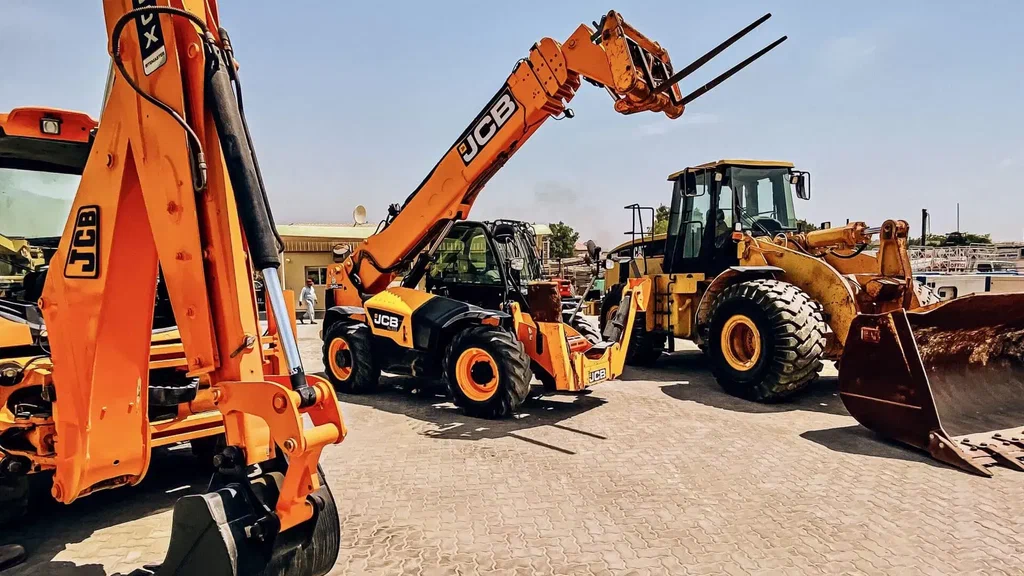
Heavy machinery plays an important role in construction, infrastructure, oil and gas, logistics, manufacturing, road development, quarrying, agriculture, and industrial projects across the UAE. From excavators and bulldozers to cranes, forklifts and wheel loaders, each machine is designed for a specific type of work.
For businesses, choosing the right equipment is about more than finding a machine with enough power. Operating weight, capacity, fuel consumption, attachments, site conditions, maintenance, transport, safety, and after-sales support can all affect the real project cost.
This guide explains the main types of heavy machinery equipment in UAE, where they are used, how to choose them, and what to consider before buying or renting.
What Is Heavy Machinery?
Heavy machinery refers to large machines designed to perform demanding tasks such as excavation, earthmoving, lifting, grading, material handling, transportation, compaction, drilling, and construction work.
Common examples include excavators, wheel loaders, bulldozers, backhoe loaders, motor graders, cranes, forklifts, telehandlers, dump trucks, rollers, concrete pumps, and drilling equipment.
The right machine depends on the work, site conditions, required capacity, project duration, and operating environment.
Types of Heavy Machinery Used in the UAE
Different projects require different equipment. The following are some of the most common types of heavy equipment used across UAE construction and industrial projects.
| Equipment | Main application |
| Excavator | Digging, trenching and demolition |
| Bulldozer | Earthmoving, clearing and grading |
| Wheel loader | Loading and material handling |
| Backhoe loader | Excavation and general site work |
| Motor grader | Road grading and levelling |
| Crane | Heavy lifting |
| Forklift | Warehouse and material handling |
| Telehandler | High-reach lifting |
| Dump truck | Moving soil and aggregates |
| Roller | Soil and asphalt compaction |
| Concrete pump | Concrete placement |
| Drilling rig | Drilling and foundation work |
Excavators
Excavators are widely used for digging foundations, trenches, drainage systems, demolition and material handling. Crawler excavators are useful on demanding construction sites, while wheeled excavators can provide greater mobility on suitable surfaces.
The required operating weight, digging depth, reach, bucket capacity and attachment type should be matched to the project.
Bulldozers
Bulldozers are designed for pushing, clearing, spreading and moving large quantities of soil and other materials. They are commonly used for site preparation, earthmoving, road construction and large infrastructure projects.
Wheel Loaders and Backhoe Loaders
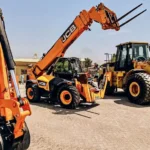
Wheel loaders are mainly used for loading aggregates, soil and other materials. Backhoe loaders combine a loader at the front with an excavating arm at the rear, making them useful when a project needs one versatile machine for several tasks.
Cranes, Forklifts and Telehandlers
Cranes are used when materials must be lifted to specific heights or positions. Forklifts are common in warehouses, industrial facilities and logistics operations, while telehandlers provide reach and lifting flexibility on construction sites.
Where Is Heavy Machinery Used in the UAE?
Heavy machinery is used across nearly every major project sector.
Construction companies use excavators, loaders, graders, cranes and compactors for buildings, foundations and site preparation. Road and infrastructure projects rely on graders, rollers, dump trucks, excavators and other earthmoving equipment.
The UAE’s industrial and energy sectors may require specialist equipment for oil and gas, power generation, manufacturing and large-scale industrial projects. Logistics and ports also depend on material-handling equipment such as forklifts, cranes and other lifting machinery.
Demand is not limited to Dubai and Abu Dhabi. Equipment is used across Sharjah, Ajman, Ras Al Khaimah, Fujairah, Umm Al Quwain and Al Ain, depending on local construction, industrial and infrastructure activity.
How to Choose the Right Heavy Machinery
Choosing heavy machinery should start with the job rather than the brand or price.
First, define exactly what the machine needs to do. Consider the material, work area, required production rate, ground conditions and access restrictions.
Then compare the machine’s technical specifications. Important factors include:
- Operating weight
- Engine power
- Rated capacity
- Bucket capacity
- Digging depth
- Reach
- Working height
- Hydraulic performance
- Ground clearance
- Machine dimensions
- Fuel consumption
- Attachments
For example, an excavator selected for deep trenching may require different specifications from one used mainly for demolition. Similarly, a wheel loader for moving aggregates may need a different bucket and operating capacity from one used for general site work.
The goal is not simply to choose the biggest machine. An oversized machine can increase transport, fuel and operating costs without providing a practical benefit.
Buying vs Renting Heavy Equipment in UAE
Both buying and renting can make sense for B2B projects.
Buying may suit contractors or industrial businesses that expect regular, long-term equipment utilisation. Ownership provides greater control over availability and can create resale value, but the business also carries maintenance, depreciation, storage and repair responsibilities.
Renting can be more practical for short-term or project-specific work. It reduces the need for a large upfront investment and can provide access to specialist machinery when required.
When comparing rental offers, do not look only at the advertised daily rate. Check whether the quotation includes an operator, fuel, delivery, mobilisation, insurance, attachments, overtime and other charges.
Published UAE rental references show that rates vary significantly by machine type, capacity, location, duration and contract terms. For example, current market listings show indicative rates for excavators, cranes, forklifts and loaders across widely different ranges, so a formal quotation is necessary for accurate project budgeting.
New vs Used Heavy Machinery
Used heavy machinery can reduce the initial purchase cost, but condition is more important than age alone.
Before buying used equipment, inspect the:
- Engine and transmission
- Hydraulic system
- Undercarriage
- Tires
- Boom, arm and bucket
- Chassis
- Electrical system
- Cabin
- Safety equipment
- Operating hours
- Maintenance history
Ask for service records and machine documentation. Check whether the equipment has been involved in major accidents or structural repairs, and confirm that replacement parts are available.
For expensive equipment, a professional inspection before purchase can help identify problems that are not obvious during a short demonstration.
How Much Does Heavy Machinery Cost in the UAE?
There is no single heavy machinery price in UAE because equipment costs vary considerably.
Purchase and rental prices can change according to:
- Machine type and size
- Brand and model
- New or used condition
- Operating hours
- Machine capacity
- Attachments
- Rental duration
- Operator inclusion
- Delivery distance
- Fuel arrangements
- Maintenance requirements
- Project location
A proper B2B cost calculation should consider more than the purchase or rental price. Include transportation, mobilisation, fuel, operators, maintenance, spare parts, downtime, insurance where applicable, and eventual resale value.
For rental equipment, weekly or monthly contracts may have different effective rates from short-term daily hire. Current UAE rental platforms also stress that their displayed rates are estimates and that exact pricing depends on equipment model, availability, location and contract terms.
UAE Safety, Inspection and Compliance Considerations
Heavy machinery must be treated as a safety-critical part of a project, particularly where lifting, excavation or heavy material movement is involved.
Businesses should verify applicable inspection requirements, maintenance records, operator competency, manufacturer instructions and project-specific safety requirements before equipment is put to work.
Abu Dhabi City Municipality has emphasized regular technical inspection and auditing of tools and equipment at construction sites, with inspections carried out by appropriately skilled personnel.
Dubai Municipality’s published circulars also include requirements and guidance relating to heavy equipment and machinery movements, tower cranes, construction-site safety and approved third-party inspection companies.
Requirements can differ according to equipment type, project and emirate, so businesses should confirm the applicable requirements rather than assuming that one certification covers every situation.
For regulated products, MoIAT conformity processes may also be relevant depending on the product and applicable technical regulations.
How to Evaluate Heavy Equipment Suppliers in UAE
A reliable equipment supplier should provide more than a machine and a price.
Before placing an order, ask about:
- Equipment availability and lead time
- Complete technical specifications
- Machine documentation
- Inspection records
- Warranty
- Spare-parts availability
- Preventive maintenance
- Technical support
- Delivery and mobilisation
- Payment terms
- Replacement arrangements
- After-sales service
For specialist requirements, an equipment trading company can also help source machinery that is not immediately available from local stock.
QSM LLC supports businesses looking for equipment through an equipment trading and sourcing approach, making supplier communication, technical requirements and project-specific equipment needs important parts of the procurement process.
For related procurement topics, read our guide heavy equipment suppliers UAE to learn more about evaluating equipment sources for commercial and industrial projects.
How UAE Conditions Affect Heavy Equipment
The UAE environment creates additional considerations for equipment owners and operators. High temperatures, dust, sand and intensive machine utilisation can place greater demands on engines, cooling systems, filters, hydraulics and other components.
Maintenance schedules should follow manufacturer recommendations, while businesses should pay close attention to air filtration, cooling, lubrication, tires or undercarriage condition and hydraulic systems.
Transport is another consideration. Large machinery may require specialised low-bed transport and appropriate route planning, particularly when moving equipment between industrial areas and project sites.
Heavy Machinery Inspection Checklist
Before accepting or purchasing equipment, confirm:
- Machine identification and documentation
- Operating hours
- Service history
- Engine condition
- Hydraulic leaks
- Transmission performance
- Brakes and steering
- Tires or tracks
- Structural condition
- Attachments
- Safety systems
- Inspection records
- Spare-parts support
- Warranty terms
For lifting equipment, additional checks may be required for the specific crane or lifting system and its intended application.
Final Thoughts
Heavy machinery equipment in UAE covers a broad range of machines used in construction, infrastructure, energy, logistics, manufacturing and industrial operations.
The right choice depends on the application, site conditions, required capacity, project duration and total operating cost. Buying, renting or sourcing used machinery can each be suitable in different circumstances.
For B2B buyers, the most important step is to look beyond the headline price. Specifications, inspection, documentation, maintenance, spare parts, transport, operator requirements and supplier support can have a major effect on equipment performance and project costs.
A careful procurement process helps businesses select equipment that fits the actual job rather than simply choosing the largest or cheapest available machine.
FAQs
What are the main types of heavy machinery in the UAE?
Common types include excavators, bulldozers, wheel loaders, backhoe loaders, motor graders, cranes, forklifts, telehandlers, dump trucks, rollers, concrete pumps and drilling equipment.
What heavy equipment is commonly used in construction?
Excavators, wheel loaders, bulldozers, backhoe loaders, motor graders, dump trucks, rollers, cranes and concrete equipment are widely used for different construction activities.
Is it better to buy or rent heavy machinery in the UAE?
It depends on utilisation and project duration. Buying can suit businesses with regular long-term requirements, while renting can make sense for short-term projects or specialist equipment.
What should I check before buying used heavy machinery?
Check the engine, hydraulics, transmission, undercarriage, tires or tracks, structural condition, operating hours, maintenance records, documentation, safety equipment and spare-parts availability.
What affects heavy machinery rental prices in the UAE?
Machine size, capacity, model, rental duration, location, availability, operator inclusion, fuel, delivery, attachments and contract terms can all affect the final rental cost.
How do I choose the right excavator?
Start with the required digging depth, reach, material, site access, operating weight, bucket capacity, hydraulic requirements and attachments. Choose a machine that meets the job requirements without unnecessary capacity.
Why is equipment inspection important?
Inspection can identify mechanical, hydraulic, structural or safety problems before equipment is used or purchased. It is particularly important for expensive used machinery and safety-critical equipment.
Can heavy machinery be used across all UAE emirates?
Equipment can be used across the UAE, but transportation, site access, permits, inspection requirements and project-specific rules may vary. These requirements should be checked before moving or operating large machinery.
What makes a good heavy equipment supplier?
A good supplier should provide clear specifications, documentation, inspection information, realistic delivery times, spare-parts support, technical assistance, warranty terms and reliable after-sales service.