

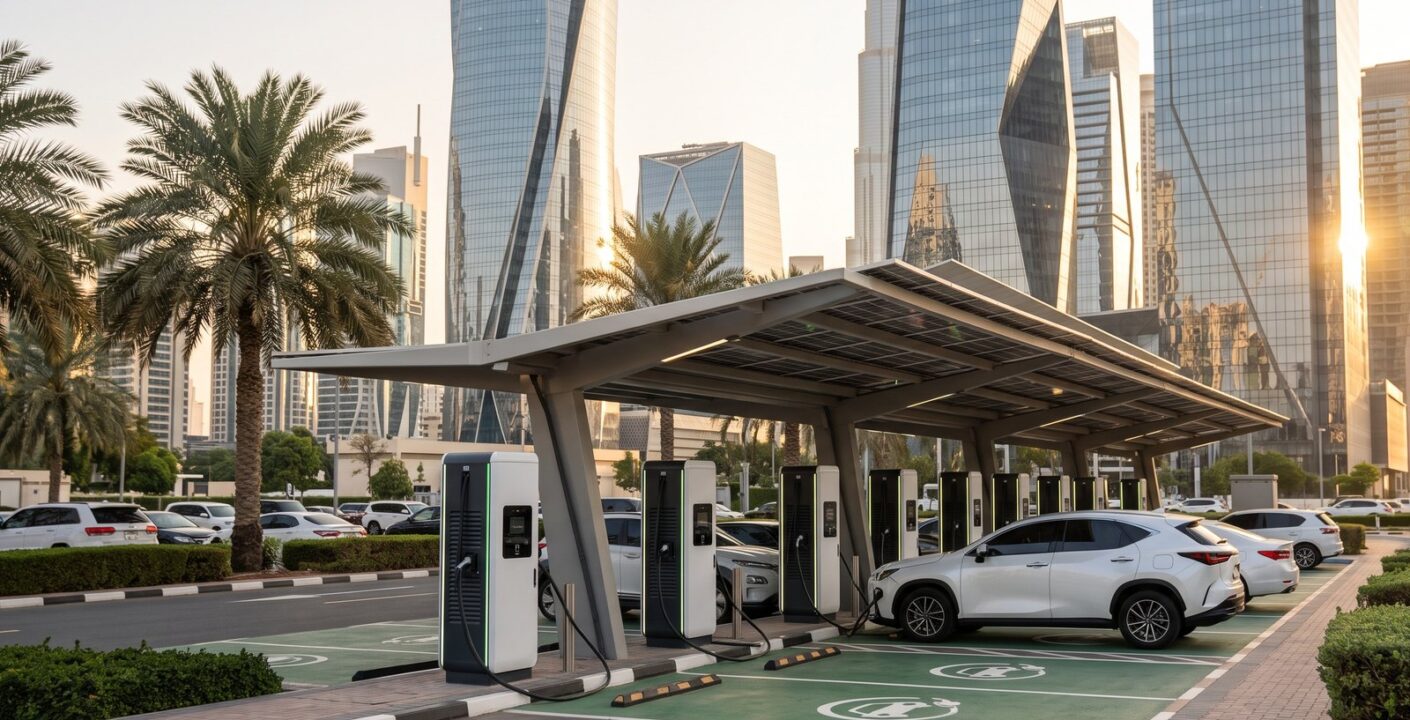
Businesses planning to install electric vehicle charging infrastructure need reliable equipment that matches their project requirements, electrical capacity and local regulations. In the UAE, EV charging stations are available through specialist EV charging equipment suppliers and electrical equipment trading companies.
QSM LLC (Quality Standards Machinery) supplies EV charging stations for business and infrastructure projects across the UAE. Its product range includes AC smart chargers, DC fast charging stations and ultra-fast charging solutions for commercial properties, fleet operators, contractors and other business customers.
Before choosing a supplier, buyers should compare charging power, connector compatibility, smart charging features, technical documentation and applicable UAE conformity requirements. Selecting the right equipment from the beginning can help avoid compatibility issues and unnecessary project costs.
Where Can Businesses Buy EV Charging Stations in UAE?
Businesses can source EV charging stations from specialist EV charger suppliers, electrical equipment trading companies and authorised equipment distributors. The right supplier should be able to explain available products, provide technical datasheets and help buyers identify equipment suitable for their intended application.
QSM LLC is an equipment supplier based in Al Khabeesi, Dubai, serving business customers across the UAE. Companies can explore its EV charging station range for commercial buildings, parking facilities, fleet depots, hotels, shopping malls and infrastructure projects.
When comparing EV charging equipment suppliers in UAE, consider:
- Available AC, DC fast and ultra-fast charging options.
- Charging power output and connector compatibility.
- Manufacturer specifications and technical datasheets.
- Smart charging and charging management capabilities.
- Product conformity and relevant certification documents.
- Warranty information and equipment availability.
- Delivery arrangements and the level of technical support offered.
For larger projects, buyers should request a quotation based on their required charger quantity, power ratings and project specifications rather than selecting equipment based on price alone.
Types of EV Charging Stations Available in UAE
EV charging stations are available in different power ratings and configurations. The most suitable option depends on how frequently vehicles need charging, how long they remain parked and the electrical capacity available at the site.
AC EV Charging Stations
AC chargers supply alternating current to an electric vehicle, which uses its onboard charger to convert the electricity into the form required by its battery.
A 22 kW AC charging station is a common option for locations where vehicles remain parked for extended periods. These chargers can suit:
- Office buildings and commercial parking facilities.
- Hotels and hospitality properties.
- Residential communities.
- Shopping centres and retail destinations.
- Employee and visitor parking areas.
AC charging is generally more suitable for longer parking periods than rapid-turnover charging. However, actual charging speed also depends on the vehicle’s onboard charger, battery condition and available electrical supply.
DC Fast Charging Stations
DC fast chargers supply direct current to the vehicle’s battery, allowing compatible vehicles to charge more quickly than with typical AC charging equipment.
QSM’s advertised product range includes DC fast charging options from 60 kW to 180 kW. These power ratings can be considered for:
- Fleet depots with scheduled vehicle movements.
- Commercial charging facilities.
- Highway and destination charging locations.
- Logistics and transportation operations.
- Businesses requiring faster vehicle turnaround.
The actual charging speed depends on the vehicle’s maximum charging capability, battery temperature, state of charge and available power.
Ultra-Fast EV Charging Stations
Ultra-fast charging systems are designed for locations where vehicles need higher charging power and shorter charging stops. QSM’s product page also identifies ultra-fast charging hubs of 350 kW and above.
These systems may suit large charging facilities, high-demand fleet operations and infrastructure projects. However, they require careful planning because the site’s electrical supply, grid connection, distribution equipment and charging management system must support the intended load.
| Charger type | Example power range | Common applications |
| AC smart charger | Up to 22 kW | Offices, hotels, residential communities and commercial parking |
| DC fast charger | 60–180 kW | Fleet depots, commercial charging and destination facilities |
| Ultra-fast charger | 350 kW and above | High-demand charging hubs and major infrastructure projects |
Actual equipment specifications and availability should always be confirmed using the manufacturer’s datasheet.
AC vs DC Fast Charging: Which Should Businesses Choose?
The choice between AC and DC charging depends mainly on vehicle usage and parking duration.
AC charging is often a practical option when vehicles stay parked for several hours. For example, a hotel may offer AC charging to guests who leave their vehicles overnight, while an office building may provide charging during working hours.
DC fast charging is more appropriate when vehicles need to return to service quickly. Fleet operators, commercial charging facilities and high-traffic locations may benefit from higher-power DC equipment.
Before deciding, businesses should consider:
- Vehicle requirements: Check the maximum AC and DC charging power supported by the vehicles.
- Parking duration: Determine how long vehicles will typically remain connected.
- Electrical capacity: Assess the available power supply and possible upgrade requirements.
- Expected demand: Estimate how many vehicles may charge simultaneously.
- Future expansion: Consider whether additional charging points may be needed later.
A mixed charging setup can also be appropriate. For example, a commercial facility may use AC chargers for longer-stay parking and DC chargers for vehicles requiring faster turnaround.
EV Charging Solutions for Different Business Sectors
Different businesses have different charging requirements. A suitable EV charging system should reflect the property’s operations, vehicle types and expected usage.
Hotels and shopping malls: These properties may need AC charging for visitors who stay for several hours. Locations with higher vehicle turnover may also consider DC fast chargers.
Office buildings: Employees often park for extended periods, making AC smart chargers a practical option. Access controls and charging management features can help businesses manage usage.
Property developers: Developers planning new residential or commercial projects should consider charging infrastructure early. Electrical capacity, parking layouts, cable routes and future expansion can influence equipment selection.
Fleet operators: Delivery companies, transport businesses and corporate fleets should evaluate charging schedules, vehicle battery capacity and depot power availability. DC fast charging may help reduce vehicle downtime where faster charging is required.
EPC contractors: Engineering, procurement and construction contractors need equipment that meets project specifications, connector requirements and applicable conformity standards. Technical datasheets and manufacturer documentation are particularly important during procurement.
Government and infrastructure projects: Larger projects may require detailed technical evaluations, power planning and compliance checks before equipment is approved for use.
UAE EV Charging Regulations and Compliance Requirements
EV charging equipment procurement in the UAE involves more than selecting a charger with the required power output. Businesses should also check applicable federal requirements and the regulations of the emirate where the equipment will be installed.
Federal EVSE Requirements
UAE Cabinet Resolution No. 175 of 2025 establishes technical requirements for Electric Vehicle Supply Equipment (EVSE). It became effective on 27 May 2026.
The regulation covers AC and DC EVSE used in public places or commercial locations to provide paid charging services. Private domestic equipment used by individuals is excluded unless it is used to provide paid charging to third parties.
Relevant requirements include electrical safety conformity through the UAE Conformity Assessment System (ECAS) and applicable metrological conformity requirements before public use.
The framework also refers to accuracy classes A, B or C, OIML G22 verification requirements and annual periodic verification. Calibration documentation from laboratories accredited to ISO/IEC 17025 is also relevant to the verification process.
Buyers should confirm which requirements apply to their specific equipment, business model and intended use before procurement.
Dubai and Abu Dhabi Requirements
Dubai has its own EV charging infrastructure framework administered by the Dubai Electricity and Water Authority (DEWA). Its technical requirements address equipment specifications, connectors, environmental conditions, charging management systems and installation considerations.
Relevant technical guidance includes:
- Type 2 connectors for AC charging.
- CCS2 connectors for DC charging.
- Environmental suitability for Dubai’s high temperatures and humidity.
- Appropriate enclosure protection, including IP54 and IK10 specifications in referenced requirements.
- OCPP 1.6J minimum communication support where applicable.
Businesses should also distinguish between purchasing charging equipment and operating public charging infrastructure. Independent Charge Point Operators (CPOs) operating public EV charging infrastructure in Dubai must meet the applicable DEWA licensing and approval requirements. Buying a charger does not automatically make a supplier a licensed CPO.
Abu Dhabi follows its own EV charging policy framework, involving the Department of Energy and relevant distribution companies, including ADDC and AADC.
Requirements can differ between emirates and project types. For more information about the regulatory framework, read our guide to UAE EV charger regulations and compliance requirements.
What Should You Check Before Buying an EV Charging Station?
Before placing an order, businesses should review the technical and commercial details of the equipment.
Charging power and capacity: Choose a power rating that matches vehicle requirements, expected demand and the site’s electrical capacity.
Connector compatibility: Type 2 and CCS2 are important connector types to consider for UAE projects. Confirm compatibility with the vehicles that will use the charging stations.
Smart charging features: Smart charging can help manage charging schedules and distribute available electrical capacity. Dynamic load management may be useful where multiple chargers operate at the same location.
Charging management software: A Charge Point Management System (CPMS) can help businesses monitor charging sessions, manage users and review equipment performance. For connected systems, check the supported Open Charge Point Protocol (OCPP) version.
Safety and conformity documents: Request relevant test reports, conformity certificates, technical datasheets and manufacturer documentation. Confirm that the equipment meets the requirements applicable to its intended use.
Future expansion: Consider whether the charging system can support additional charging points, software integration or higher power requirements as the business grows.
Why Consider QSM LLC for EV Charging Equipment Supply?
QSM LLC (Quality Standards Machinery) supplies EV charging stations for B2B customers across the UAE. Its advertised product categories include 22 kW AC smart chargers, DC fast chargers from 60–180 kW and ultra-fast charging solutions of 350 kW and above.
The equipment range is relevant to different commercial and infrastructure applications, including property developments, offices, hotels, shopping malls, fleet operations and contractor-led projects.
Businesses can contact QSM to discuss their equipment requirements and request product information based on their project needs.
How to Request an EV Charging Station Quotation
To help a supplier recommend suitable equipment, prepare the main details of your project before requesting a quotation.
Include:
- Project location and application.
- Number of charging stations required.
- Preferred AC or DC charger type, if known.
- Required charging power.
- Vehicle types and connector requirements.
- Available electrical capacity, if assessed.
- Any project specifications or conformity requirements.
Providing these details helps narrow down suitable equipment and makes it easier to compare supplier quotations.
Final Thoughts
Finding the right place to buy EV charging stations in UAE starts with understanding your project’s charging requirements. AC chargers can suit offices, hotels and longer-stay parking, while DC fast and ultra-fast systems may be more appropriate for fleet operations and high-demand charging facilities.
Businesses should also evaluate connector compatibility, electrical capacity, smart charging features and applicable UAE conformity requirements before purchasing.
QSM LLC supplies EV charging equipment for business customers across the UAE, offering AC, DC fast and ultra-fast charging categories. Companies planning commercial or infrastructure projects can contact QSM on +971 50 370 1273 to discuss their requirements and request a quotation.
FAQs
1. Where can businesses buy EV charging stations in the UAE?
Businesses can buy EV charging stations from specialist EV charging equipment suppliers and electrical equipment trading companies. QSM LLC supplies AC, DC fast and ultra-fast EV charging equipment for B2B projects across the UAE.
2. Can companies purchase EV chargers in bulk in the UAE?
Yes. Businesses, contractors, property developers and fleet operators can approach equipment suppliers for bulk procurement. The quotation should specify charger quantities, power ratings, connector types and project requirements.
3. What is the difference between AC and DC EV charging stations?
AC chargers supply alternating current, which the vehicle converts for battery charging. DC fast chargers supply direct current to the battery and generally support faster charging when the vehicle and electrical supply allow it.
4. Which EV charging station is suitable for a shopping mall?
AC chargers can suit shopping mall parking areas where visitors stay for several hours. DC fast chargers may be useful in locations with higher vehicle turnover or a need for shorter charging stops.
5. Are 22 kW AC chargers suitable for commercial parking?
Yes. A 22 kW AC charger can be suitable for commercial parking, offices, hotels and other locations where vehicles remain parked for extended periods. Actual charging speed depends on the vehicle’s onboard charger and available electrical supply.
6. What power rating should a fleet operator consider?
Fleet operators should consider vehicle battery capacity, daily travel distance, charging schedules, parking duration and available electrical capacity. AC chargers may suit overnight depot charging, while DC fast chargers may be more appropriate when vehicles need quicker turnaround.
7. Which connector types are relevant to EV charging projects in the UAE?
Type 2 is an important connector for AC charging, while CCS2 is widely relevant to DC fast charging. Buyers should confirm compatibility with their vehicles and the applicable local technical requirements.
8. What documents should buyers request from an EV charger supplier?
Buyers should request technical datasheets, manufacturer specifications, relevant conformity certificates, safety documentation, warranty details and connector information. Additional documents may be required depending on the equipment and project.
9. What are the UAE conformity requirements for commercial EV chargers?
Applicable requirements can include electrical safety conformity through ECAS and metrological conformity requirements under Cabinet Resolution No. 175 of 2025. The exact obligations depend on the equipment’s use and whether it provides paid charging services in public or commercial locations.
10. Can QSM LLC supply EV charging stations across the UAE?
Yes. QSM LLC serves B2B customers across the UAE. Businesses can contact the company on +971 50 370 1273 or visit https://qsmllc.ae/ to discuss EV charging equipment requirements.


1 Comment
[…] For a broader supplier-selection discussion, read our guide on where to buy EV charging stations in UAE. […]